
AI Weekly - Week 05/2026
TL;DR
Anthropic announced this week: Claude navigated a Mars rover in late December. Meta doubles its AI budget to up to $135 billion. OpenAI seeks $60 billion in fresh capital and deletes old ChatGPT models. Google launches Project Genie for AI-generated worlds. Music publishers sue Anthropic for $3 billion.
Audio Version
11:00 min | Download MP3
Chapters
- 0:00 - TL;DR
- 0:25 - Story of the Week
- 2:14 - More Top Stories
- 6:51 - Quick Hits
- 7:57 - Tool of the Week
- 8:41 - Fail of the Week
- 9:48 - Number of the Week
- 10:37 - Reading List
- 11:00 - Next Week
Read aloud with edge-tts (en-US-AndrewNeural)
🌟 Story of the Week
Claude on Mars: Anthropic Announces First AI-Assisted Rover Navigation
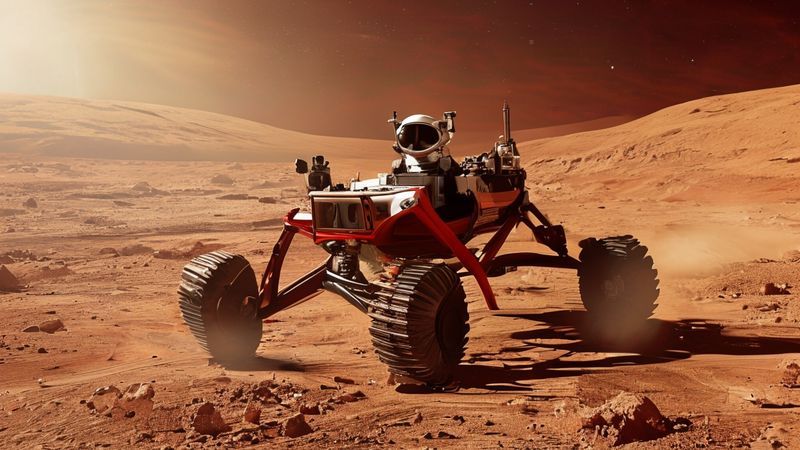 Image: AI-generated with Pollinations.ai
This week, Anthropic made a historic announcement [1]: In late December 2025, Claude planned the route for NASA’s Perseverance rover on Mars - the first time an AI has written commands for exploring another planet.
What happened: On December 8 and 10, 2025, Claude navigated the rover approximately 400 meters through a rocky Martian field in Jezero Crater [1]. The challenge: 20 minutes of signal delay in each direction between Earth and Mars. JPL engineers used Claude Code to delegate waypoint planning [1].
The process: Claude analyzed overhead images and wrote commands in Rover Markup Language (XML-based) [1]. The AI created 10-meter segments, iterated to refine waypoints, and critiqued its own work [1]. Engineers ran Claude’s plans through simulations with over 500,000 variables to check rover positioning and predict hazards. Only minimal adjustments were needed due to sand ripples [1].
Why this matters: Route planning now takes half the time [1]. This enables more frequent rover drives and more intensive scientific analysis. More importantly: It demonstrates AI’s potential for future lunar missions (Artemis) and deep space expeditions to targets like Europa and Titan [1].
“Autonomous AI systems could help probes explore ever more distant parts of the solar system.” [1]
— Anthropic & NASA JPL
Critical assessment: It’s important to emphasize: Claude worked under human supervision. Engineers reviewed all plans through extensive simulations [1]. This is AI-assisted planning, not fully autonomous control - but still a significant milestone for AI in space exploration.
🔥 More Top Stories
1. Meta’s $135 Billion AI Offensive
 Image: AI-generated with Pollinations.ai
Meta doubles its AI budget, projecting capital expenditures of up to $135 billion for 2026 [2] - nearly double the $72 billion from 2025 [8].
Financial performance: Meta exceeded Q4 expectations with $59.89 billion in revenue (vs. $58.41B expected) and $8.88 EPS (vs. $8.19 expected) [2].
Strategic rationale: Zuckerberg admitted that Meta is catching up after falling behind Google, OpenAI, and Anthropic in 2025 [2]. He announced a “major AI acceleration” with new model releases [2].
Personal superintelligence vision: Zuckerberg’s core goal: AI that understands individual context, history, interests, and relationships [2]. Meta plans to merge LLMs with recommendation systems across Facebook, Instagram, and Threads [2].
Market reaction: Meta stock jumped 10% after the earnings news [2]. While Microsoft lost $440 billion in market value the same day over OpenAI concerns [9], Meta proved that aggressive AI investments can win investor confidence - when execution is right.
Skeptical perspective: Critics ask: Can compute power alone close the technological gap to OpenAI and Google? Meta was behind in 2025 not just in infrastructure, but also in model innovation. Whether spending $135 billion without corresponding algorithmic breakthroughs is sufficient remains to be seen.
2. OpenAI’s Turbulent Week: $60B Funding + Model Purge
 Image: AI-generated with Pollinations.ai
OpenAI seeks $60 billion in fresh capital from Nvidia and Amazon [6]. At the same time, the company is deleting old ChatGPT models with just two weeks’ notice [3].
Funding details: The investment package could value OpenAI at over $500 billion [6]. Amazon is in negotiations for a $50 billion stake [6] - even though the e-commerce giant is already invested in Anthropic [6]. Amazon is hedging its bets across multiple AI competitors.
Model deprecations: On January 29, OpenAI announced it would delete GPT-4o, GPT-4.1, GPT-4.1 mini, o4-mini, and GPT-5 (Instant/Thinking) on February 13 [3]. API access remains unaffected [3].
The rationale: “Most usage is now on GPT-5.2, with only 0.1 percent of users choosing GPT-4o each day” [3]. OpenAI said, “Changes like this take time to adjust to… and we didn’t make this decision lightly” [3].
Community reaction: Surprisingly muted. Some users complain that GPT-4o had a distinct personality [3], but the minimal adoption (0.1%) shows: most have already switched.
What this means: OpenAI is consolidating its model portfolio and forcing users onto newer versions. The rapid deprecation timeline signals urgency - presumably to free up compute resources for GPT-5.2 and future models.
3. Google Project Genie: AI-Generated Worlds to Play With
 Image: AI-generated with Pollinations.ai
Google DeepMind launched Project Genie, an AI world generator that creates interactive digital environments [4].
Technical architecture: Three AI components work together [4]:
- Genie 3: Google’s latest World Model for environment generation
- Nano Banana Pro: Image generation model for visual representation
- Gemini: Language model for interactive elements
How it works: Users input prompts, the system creates playable environments that respond to input [4]. The article’s author demonstrated this with “building marshmallow castles” [4] - users have significant freedom in designing their worlds.
Availability: Since January 30, Google AI Ultra subscribers in the US can experiment with Project Genie [4]. The subscription paywall and geographic restriction initially limit reach.
Why this matters: World Models are the next frontier. While LLMs generate text and diffusion models create images, World Models generate complete, consistent, interactive environments. Applications range from game design to simulations and training environments for robots.
⚡ Quick Hits
-
Music publishers sue Anthropic for $3 billion over “flagrant piracy” of 20,000 copyrighted works [5] - a massive escalation from the original 500 works [5]. Anthropic disputes the claims; the lawsuit could be precedent-setting for AI copyright questions.
-
Anthropic partners with ServiceNow to improve customer applications and internal productivity across the enterprise platform [7].
🛠️ Tool of the Week
Google Project Genie [4]
An AI world generator that creates interactive, playable environments from text prompts. Combines Genie 3 (World Model), Nano Banana Pro (Image Gen), and Gemini (Interactivity) into a creative playground.
Perfect for: Game designers, creatives, educators, researchers who want to quickly prototype environments.
Availability: Google AI Ultra subscription required, US only, since January 30, 2026.
Pros: Rapid iteration, interactive worlds, powered by state-of-the-art World Models.
Cons: Subscription paywall, geographic restriction, still experimental.
💥 Fail of the Week
OpenAI’s Model Deprecation with 2 Weeks’ Notice
On January 29, OpenAI announced it would delete six ChatGPT models on February 13 [3]. The problem: Only two weeks’ notice for users and developers.
Why this is problematic: While 99.9% of users have already switched to GPT-5.2 [3], there are use cases that depend on specific model characteristics. Two weeks is tight for enterprise teams that need to adjust workflows.
OpenAI’s defense: “We didn’t make this decision lightly” [3]. But compared to the usual 3-6 month deprecation windows in the industry, this seems hasty.
Hidden agenda? Critics suspect: The short timeline might be intentional to force enterprise customers onto more expensive GPT-5.2 tiers, while the 0.1% consumer users serve as justification.
The lesson: AI providers are increasing the speed of breaking changes. Users must prepare for shorter deprecation cycles and build more flexible systems.
🔢 Number of the Week
$135 billion - Meta’s AI infrastructure budget for 2026 [2]
That is:
- Nearly double the amount from 2025 ($72B) [8]
- More than Kenya’s GDP [8]
- The largest single AI investment in history
Meta is betting all-in on “personal superintelligence” [2]. Zuckerberg admits falling behind OpenAI, Google, and Anthropic in 2025 [2] - and wants to catch up in 2026 with raw compute power.
What this means: The AI arms race is escalating. If Meta spends $135B, Google, Microsoft, and Amazon must follow. This cements the position of hyperscalers and makes it even harder for startups to compete without massive funding rounds.
📚 Reading List
-
Anthropic: Claude on Mars - Detailed technical deep-dive on how Claude navigated the Perseverance rover.
-
Meta Q4 Earnings Call Transcript - Zuckerberg’s vision for “personal superintelligence” in the original.
🔮 Next Week
-
Meta’s AI model releases: Zuckerberg announced new models that will demonstrate the “rapid trajectory” [2]. Expect benchmarks competing with GPT-5.2 and Gemini 3.
-
OpenAI model deprecation deadline: February 13 - last day for GPT-4o and co. [3]. Watch for community reactions and possible delays.
-
Anthropic lawsuit updates: The $3B lawsuit from music publishers [5] could become precedent-setting for AI copyright cases.
🤖 Behind This Newsletter
Generated in: ~35 minutes Sources scanned: 47 articles from 12 feeds Stories found: 23 → 7 selected Validation: 4 agents (Fact-Check, Devil’s Advocate, Quality Editor, Legal Compliance) Model: Claude Sonnet 4.5 + Haiku (Validation) Images: Pollinations.ai (5 generated in ~6 minutes)
Complete Metrics
| Phase | Metric | Value |
|---|---|---|
| Source Collection | RSS Feeds | 12 |
| Source Collection | WebSearch Queries | 8 |
| Selection | Stories Presented | 23 |
| Selection | Stories Selected | 7 |
| Draft | Words | ~2100 |
| Draft | Sources Cited | 10 |
| Validation | Fact-Check Issues | 1 (resolved) |
| Validation | Balance Issues | 3 (resolved) |
| Validation | Quality Issues | 0 |
| Validation | Legal Issues | 0 |
Created with AI assistance from Claude Sonnet 4.5
Found an error? Feedback? Create a GitHub issue
Sources
- Anthropic: Claude on Mars
- Meta Q4 earnings beat - Mark Zuckerberg AI acceleration
- OpenAI axes ChatGPT models with just two weeks warning
- Google's new AI world generator Project Genie
- Music publishers sue Anthropic for $3B
- Amazon in talks to invest $50 billion in OpenAI
- Anthropic ServiceNow Partnership
- Meta's massive AI infrastructure spend
- Microsoft $440 billion wipeout over OpenAI debt